Emirates lost two-thirds of its profit. It renewed Arsenal anyway.
Why the Gulf's biggest brand kept paying for brand when the numbers fell.

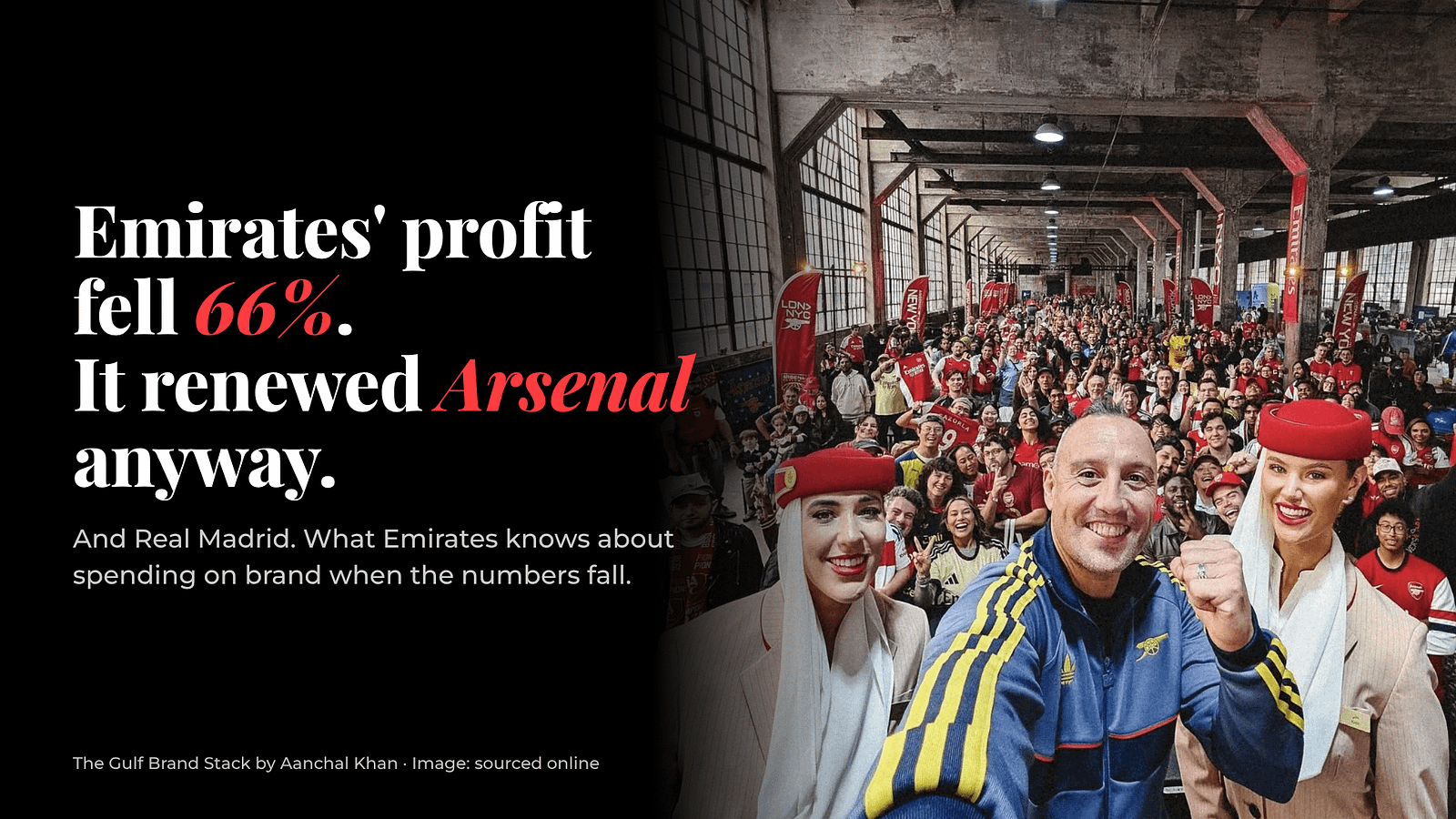
Emirates Group's half-year pre-tax profit fell 66% to AED 4.1 billion as regional conflict cut travel and fuel costs rose. It still extended its Arsenal sponsorship to 2033 and Real Madrid to 2031. Staying visible in a downturn was a deliberate choice that its balance sheet made possible.
Last week, Emirates Group published its half-year results. The number everyone quoted: profit before tax of AED 4.1 billion, down 66%.
Now read the same six months from the marketing side.
In June, Emirates extended its partnership with Real Madrid to 2031. In August, it renewed Arsenal: front of shirt, training kit and the name on the stadium, all the way to 2033.
Profit down by two-thirds. Two of the biggest deals in world football renewed for years.
It looks like a contradiction. I think it is one of the most deliberate marketing decisions in the Gulf this year. Here is why.
What six months of conflict cost
Emirates puts it down to the full six-month impact of the regional conflict: airspace restrictions and closures, government travel advisories and a jump in fuel prices.
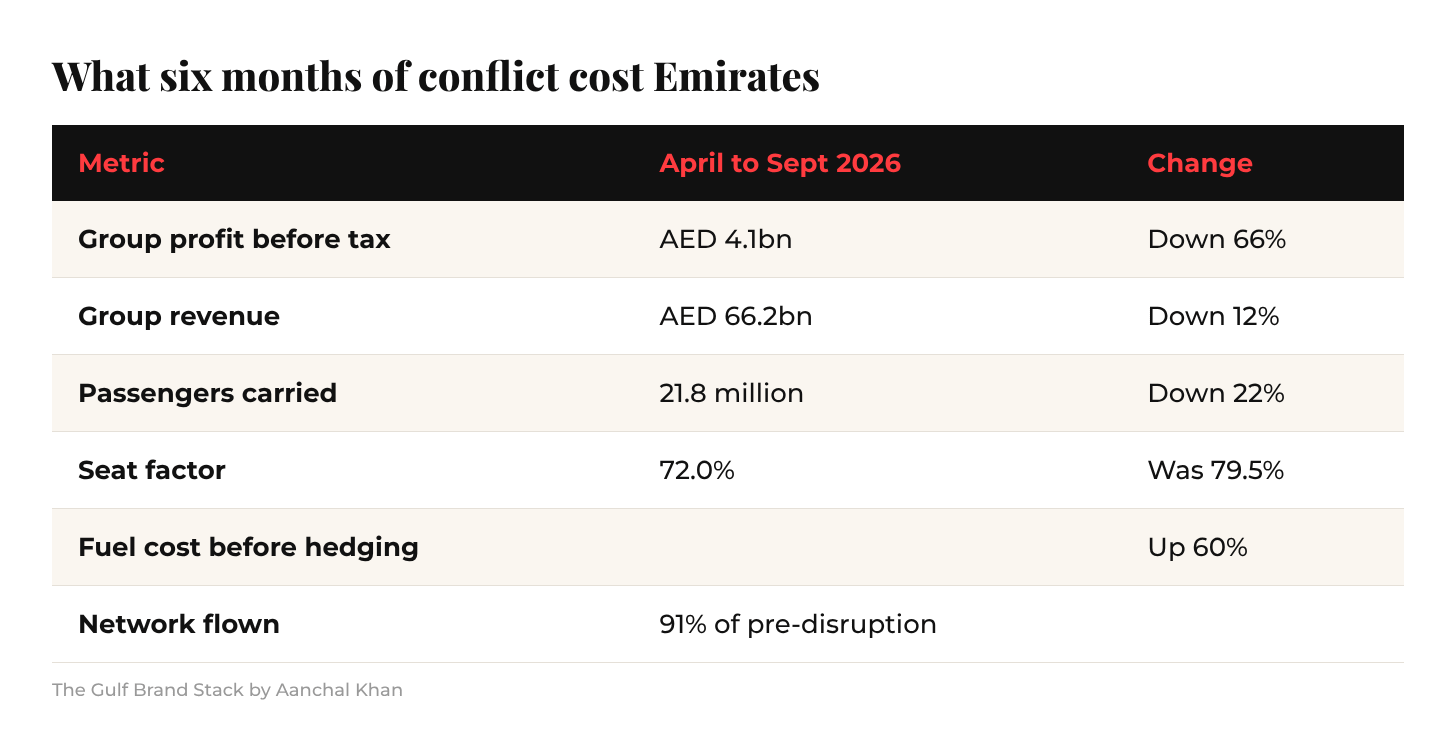
Nearly three in every ten seats flew empty. Fuel cost 60% more before hedging. By the end of September, Emirates was back to flying 91% of its pre-disruption network.
Most companies facing numbers like these do the same thing. They cut what they can cut fastest, and marketing is almost always first in line.
What Emirates did not cut
Operating costs fell by only 2%. And the spending that shapes how people feel about the brand kept going.
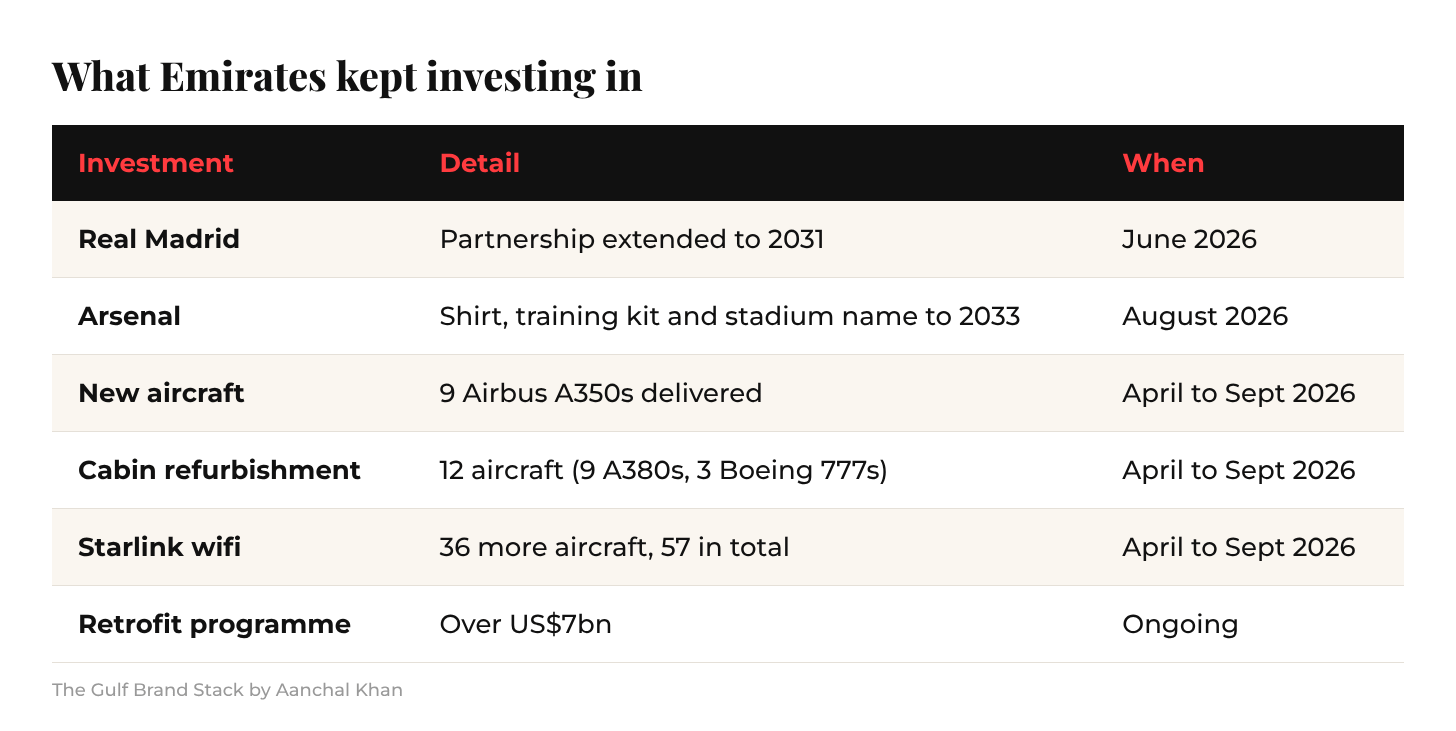
Emirates' own release calls the football deals "multi-year investments in global brand visibility." That one phrase is the whole strategy.
Why paying for brand in a bad year makes sense
1. Travel comes back faster than memory does.
Airspace reopens on a date. Brand recall takes years to rebuild. A seat factor of 72% is a problem for this half. Losing the Arsenal shirt to a rival airline would be a problem for a decade, and Arsenal are the reigning Premier League champions. The shirt has rarely been worth more.
2. Quiet markets are cheaper to be loud in.
When competitors pull back, every dirham of brand spend buys a bigger share of attention. The brands that stay visible through the quiet months are the ones people remember when they book again.
3. The product has to keep the promise.
Brand is not only a logo on a shirt. Emirates kept refurbishing cabins, adding Starlink wifi and taking new A350s. A sponsorship gets you remembered. The cabin decides whether people come back.
4. It can afford to.
Emirates ended September with AED 54.1 billion in cash. Investing in brand during a downturn is a choice that only a strong balance sheet gets to make.
The CMO questions
What did it cost? Emirates does not disclose its sponsorship fees, so I won't guess.
What did it need? Cash, and a leadership team that treats brand as an asset, not an expense line.
What's the cheaper way? Most Gulf brands do not have AED 54 billion in the bank. The lesson still travels. Don't cut every budget by the same percentage. Find the one or two brand assets your customers would notice missing, and protect them. Cut the rest.
The Gulf gap I see
The conflict has made 2026 a year of caution across the region, and caution usually starts with the marketing budget. Emirates went the other way with its biggest brand assets.
When the market comes back, and in the Gulf it always does, the brands people reach for will be the ones that never left their line of sight.
Brands are communication. Every touchpoint is a message.
Get the next article in your inbox every Tuesday.
Subscribe freeAanchal Khan is a Dubai-based marketing strategist and operator who runs marketing end to end and builds AI marketing automation. About Aanchal or work with her.
Also published on Substack.