I joined Careem Plus for free delivery. Then I stopped opening other apps.
How Careem turns one free-delivery perk into a whole-app habit, what its social feed is missing, and what I'd do if I ran it.

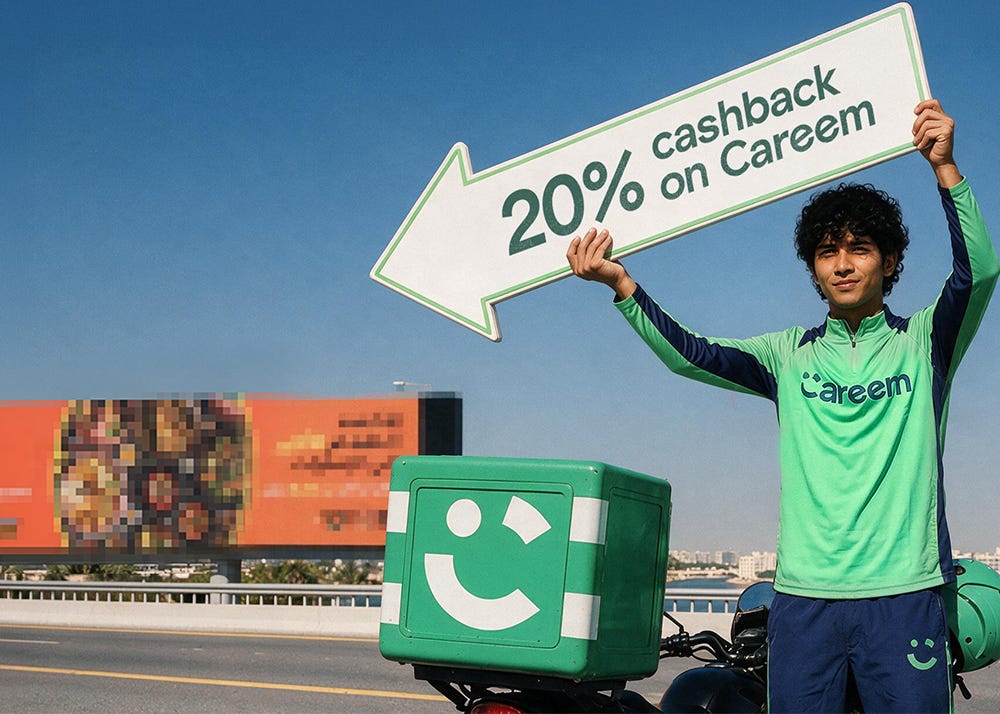
Careem Plus pulls people in with one perk, free delivery, then turns it into a habit across the whole app. The article looks at how the subscription works as a habit engine, where Careem's social content falls short, and what Aanchal would do if she ran it.
Image: sourced online
Why I'm starting with Careem
Confession: I'm a Careem Plus member. I signed up because delivery fees had started to feel steep, and free delivery made the maths easy.
Then something I didn't plan happened. Because I was already paying for Plus, I stopped ordering from other apps. Not because I compared prices, but because opening another app felt like wasting the membership.
That's the whole Careem playbook in one customer: a small fee, a perk you feel every week, and a habit that quietly locks you in.
It's also a playbook Careem is investing heavily in. Uber is back as majority owner after buying a further 12.5% this June, and Careem's non-rides business grew revenue 20% in the first half of 2026 while spending to build out food, groceries and payments. Building an everything app is expensive, which makes every marketing choice worth studying.
The strategy in one line
Get you in for one thing. Keep you for everything.
The glue is two products: Careem Plus and the Careem wallet.
Careem Plus is a monthly subscription that bundles credit back on rides, free food and grocery delivery, bike rides and dining-out discounts. Careem has advertised it at AED 19 a month in the UAE and SAR 19 in Riyadh, and its app listing promises members save AED 200+ a month.
Those are Careem's own claims, not audited figures. But the framing is the lesson: a small price, anchored against a savings number roughly ten times bigger. That's subscription marketing done right.
Now, the four plays that bring that strategy to life.
Play 1: The app itself is the ad
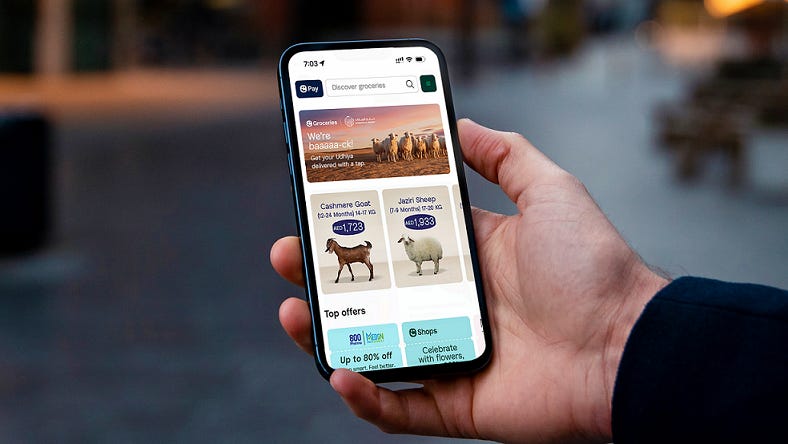
For Eid Al Adha 2024, Careem added a sheep icon to the app's service grid to launch Udhiya delivery. In 2025 it brought the service back with the same cheeky tone ("we've goat you covered"), plus the option to donate meat directly to the UAE Food Bank. All of it was made by Careem's in-house Creative Studio.
Why it works: the home screen is owned media that every active user sees, and the media cost is zero. A cultural moment, a real utility and a joke, delivered in a single tile.
Play 2: Purpose that runs through transactions
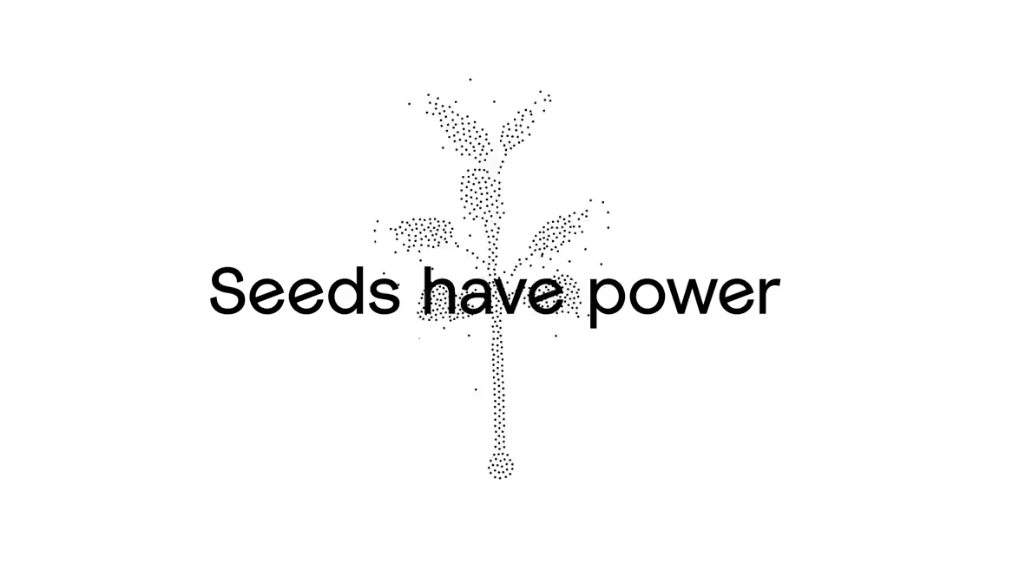
During Ramadan 2026, the Seeds for Gaza campaign raised over AED 2.1M from 4,840 customers. In the food vertical alone, 47,500 orders across 429 merchants were connected to it. Alongside it, Careem ran tip matching for captains, with both the original and matched tips paid instantly into their Careem Pay accounts.
What's smart here: the giving happens inside normal spending. One tap drives an order and builds goodwill at the same time. The tip match is supply-side marketing, aimed at the captains who are Careem's other customer.
Play 3: Creativity over budget, with a side of chaos
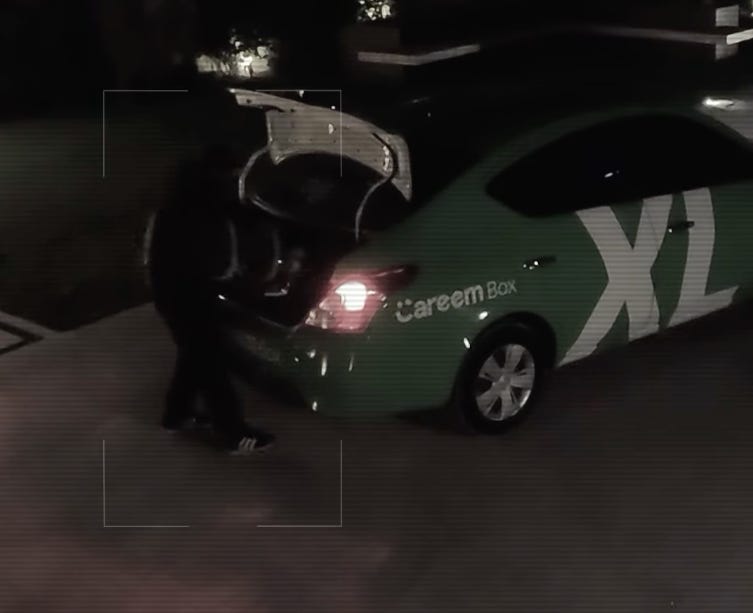
To launch Box XL (a service for moving bigger items), Careem had an influencer post "CCTV footage" of a masked figure loading a statue into a Careem-branded car outside a villa at night. It went viral. A reveal video followed a few days later, and Careem brought in a LinkedIn creator to frame the stunt as a marketing case study. Careem's brand lead said the goal was awareness, prioritising creativity over budget.
Note what happened there: a LinkedIn creator was part of the media plan. The "industry conversation" was designed. Creators are distribution now.
The watch-out: a theft-themed stunt for a brand that moves people's belongings plays close to the trust line. The quick reveal video is what kept it a story about capacity, not security. Stunts like this work best when the reveal is planned from day one.
Play 4: Pay people to use your rival, then keep them
In September 2026, Careem offered cashback in Abu Dhabi and Al Ain on food orders placed on rival delivery apps. The cashback lands in the Careem wallet and can be spent across rides, groceries and food. One order per customer.
This is conquesting through the wallet. The cost is capped by design, and the payoff is a funded wallet that pulls the user back into Careem.
The backdrop matters. Talabat leads the market, Keeta (Meituan's international arm) has moved into the UAE after Saudi Arabia and Qatar, and analysts have flagged intensifying competition across the UAE, Qatar and Kuwait. In a discount war, Careem chose a cheaper weapon: credit that only works inside its own ecosystem.
The maths: was any of this ROI-driven?
Careem doesn't publish campaign-level results, so I'm not going to invent them. Here's how I'd judge each play, and what I'd want measured.
- Udhiya icon. Cost: very low, in-house creative on an owned app surface. Measure: Udhiya orders and donations per user. Verdict: best ROI of the set. Low cost, direct sales.
- Seeds for Gaza. Cost: low media spend, plus partner and merchant coordination. Measure: orders tied to the campaign and repeat order rate after Ramadan. Verdict: strong. Purpose is attached to a transaction.
- Box XL stunt. Cost: low production, influencer fees and likely legal review. Measure: Box XL bookings after the views, not the views. Verdict: unproven. Awareness is easy to buy; usage is the test.
- Rival cashback. Cost: capped at cashback value times claims. Measure: share of claimers who spend the credit within 30 days. Verdict: smart design. The one-order cap protects it.
- Careem Plus. Cost: ongoing subsidy on rides, delivery and dining. Measure: churn, and how many services each member uses. Verdict: the real engine. I'm proof it drives loyalty.
Permissions: the stunt likely needed influencer disclosure (the post was tagged #Ad) and brand-safety sign-off for staging a fake theft. Seeds for Gaza required charity and merchant partner approvals. Udhiya depended on livestock supply and a food bank partnership. None of these are cheap in time, even when they're cheap in media.
The bigger point: Careem is in a build phase, investing in growth across many services at once. In that phase, the smartest marketing makes every dirham of incentive work harder: owned surfaces, capped offers, and a subscription that turns one perk into a habit.
If I ran Careem's marketing
I went through @careemuae's recent Instagram posts. The craft is good: short, witty captions and fun collabs, like the FIX "Mini Mini Bag" and a giant ice cube delivered across Dubai. A few things stood out, though.
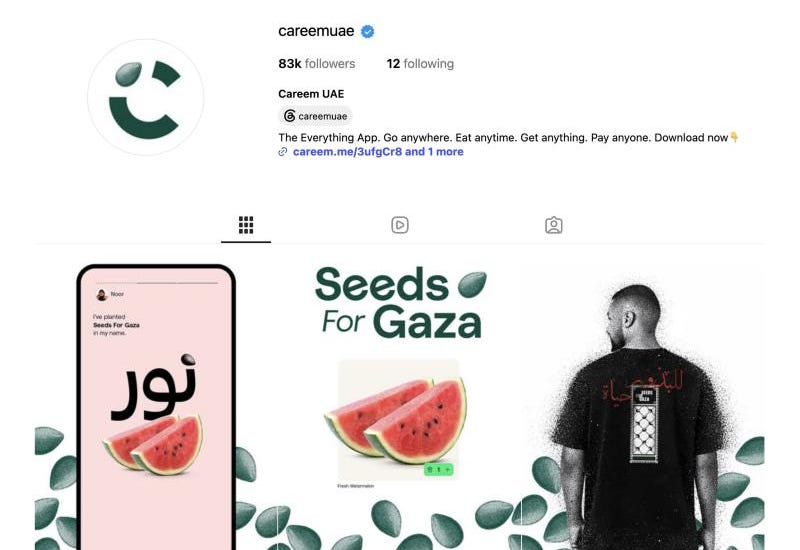
- Careem Plus is missing. None of the recent posts I reviewed sell the subscription, even though it's the product that kept me loyal.
- The feed is mostly Quik. Groceries dominate. Rides, Pay and DineOut barely appear, so the everything-app story isn't told on the channel built to tell it.
- Comments are emojis, not conversations. Captions rarely ask the audience anything.
- The pinned posts are from Ramadan. It's October 2026.
Here's what I'd do, mostly with assets Careem already has:
- Make Plus the hero. A monthly "Plus Receipt" for every member: money saved, delivery fees skipped, rides taken. It's built from data Careem already has, and it's shareable by design.
- Own the delivery-fee pain. Say what customers already think: delivery fees add up. Then show the fix. Honest beats glossy.
- Turn real members into the ads. "I tracked my Plus savings for 30 days" content from everyday users and smaller creators, alongside the big stunts.
- Put captains on the feed. The summer programme supporting delivery workers and the Ramadan tip match are strong stories that rarely reach the main grid.
- Ask, then reply. End captions with a question and answer in the comments. Loyalty comes from conversation, not hearts.
- Rotate the pins every quarter. Plus explained, the current campaign, and one service people don't know exists.
Steal this
Whatever your brand or budget:
- Your product is your cheapest media. Find the surface every customer already sees (app icon, receipt, packaging, order confirmation) and use it.
- Cap your conquest offers. One claim per customer turns a discount war into a measurable acquisition test.
- Measure the action, not the views. Viral is a means, not a result.
Careem quick hits
- Careem Pay expanded remittances to more than 35 countries (April 2026).
- Careem DineOut handled all reservations for a restaurant festival with more than 125 participating venues (April 2026).
- Far-Away Gems launched in Dubai and Abu Dhabi: 600+ hand-picked restaurants chosen on popularity and ratings (May 2026).
- Hala taxis expanded into Fujairah after a pilot that integrated local fleets into the Careem app (November 2025).
Brands are communication. Every touchpoint is a message.
Get the next article in your inbox every Tuesday.
Subscribe freeAanchal Khan is a Dubai-based marketing strategist and operator who runs marketing end to end and builds AI marketing automation. About Aanchal or work with her.
Also published on Substack.